

If you’ve landed here after a late-night Google spiral about mixing woods in your interior design, including oak and walnut—you’re in the right place.
As a millennial who grew up with oak cabinets, walls, and floors, I’m more or less allergic to anything orange—especially when it comes to oak. But there are ways to combat orange tones in old oak, and once you do, pairing oak with walnut is one of my fave combos.

So forget what you’ve heard. I’m here to assure you that it’s not only ok to pair woods; It’s brilliant. But, as with most things in interior design, successfully mixing wood tones in your home lies in the execution. By the time we’re done here, you’ll be matching character oaks with cozy walnuts with the confident touch of someone who knows exactly what they’re doing 😊
Understanding Oak and Walnut
Before we get into mixing and matching, let’s take a moment to get to know oak and walnut a bit better.
Oak
With so many shades ranging from red with subtle pink undertones to ‘white’ with yellowish hues, oak is somewhat of a chameleon in the wood world. And ugh yes, I’ll nod to the orange oak that graced (or according to me, cursed) many a ’90s home. The thing people love about oak is its grain—bold, visible, and impossible to ignore.
Oak is hard, durable, and can take a beating. That’s why you see it everywhere from floors to kitchen cabinets.

Walnut
If oak is the life of the party, walnut is the mysterious, classy stranger everyone wants to know. Its deep, rich tones of chocolate violet brown to almost black bring an instant touch of sophistication. The grain is usually straight, with the occasional wave or curl, which adds just enough visual interest without shouting for attention.
I consider walnut the wood you bring out when you want to impress. It’s softer than oak, but what it lacks in hardness it makes up for in elegance. This is the wood of statement pieces—that dining table everyone compliments, or the desk that makes working from a daily inspiration.
The differences between oak and walnut are actually what makes them work so well together. The light tones of oak can make walnut’s rich hues pop, while walnut can give oak that sophistication it can lack on its own. Their contrast makes things visually really interesting.
The Art of Mixing Oak and Walnut
As already mentioned, yes, you absolutely can mix oak and walnut. In fact, I encourage it. Doing so keeps things cozy and welcoming, which is on trend with my favourite topic, creating spaces that hug.
To blend oak and walnut well, you really have to understand their contrast. These two woods are different enough to create interest, but similar enough to play well together.
Here are some scenarios:
1. Oak Flooring with Walnut Furniture
I love to see warm oak floors paired with a sleek walnut dining table. The lighter oak provides a beautiful backdrop, allowing the rich tones of the walnut to really shine. This combination works particularly well in spaces that get plenty of natural light.
2. Walnut Flooring with Oak Furniture

Flip the script, and you’ve got an equally stunning look. Dark walnut floors create a luxurious foundation, while oak furniture adds warmth and keeps the space from feeling too heavy. It’s a great way to achieve that cozy-yet-sophisticated vibe we’re all aiming for.
- Note: If you have walnut floors, there are other furniture selections that I would recommend over oak, but if oak furniture is your jam or has been passed down as an heirloom – yes, it does work.
3. Oak Table with Walnut Chairs
An oak dining table surrounded by walnut chairs? It can be done. This combination leans farmhouse, and you’ll want to make sure your chairs are minimal in design.
4. Oak Cabinets with Walnut Accents
Have oak cabinets and wondering if you can introduce walnut? Absolutely. Think walnut open shelving or a walnut kitchen island. It breaks up the monotony and adds sophistication. It’s like adding a statement blazer to a classic outfit to elevate the look.
In all of these scenarios, contrast is your friend. If you’re working with lighter oak, lean into darker walnut pieces to create that visual interest. If you’ve got darker, red-toned oak, opt for lighter walnut pieces to keep things balanced.
A Real-World Oak and Walnut Example
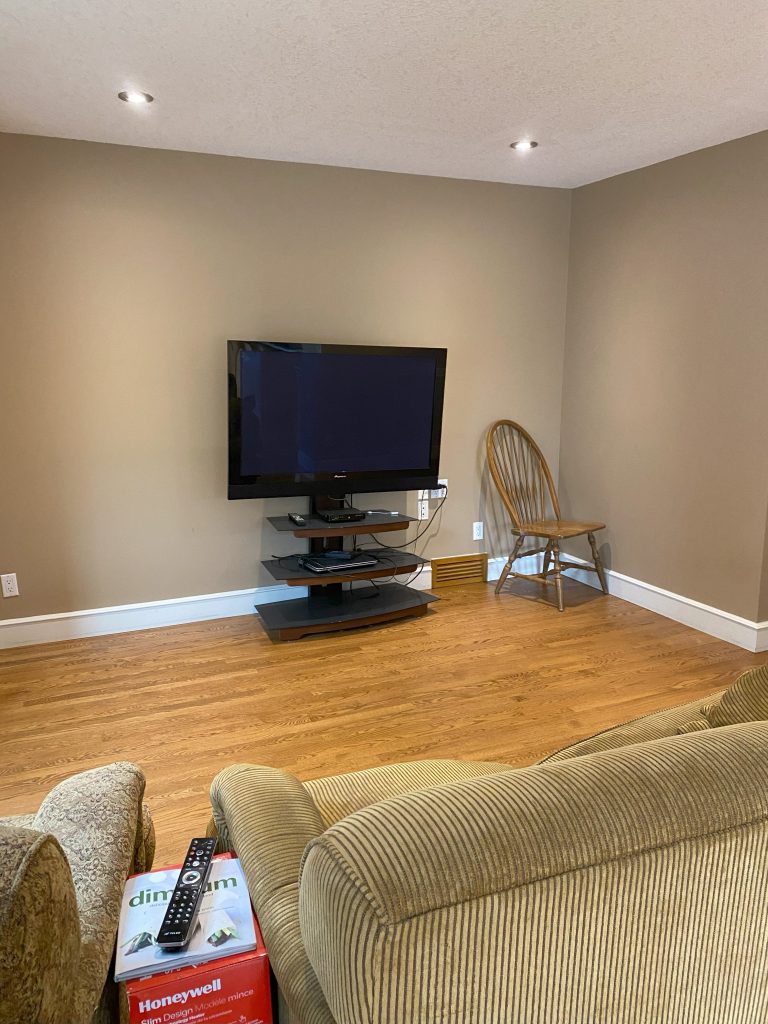
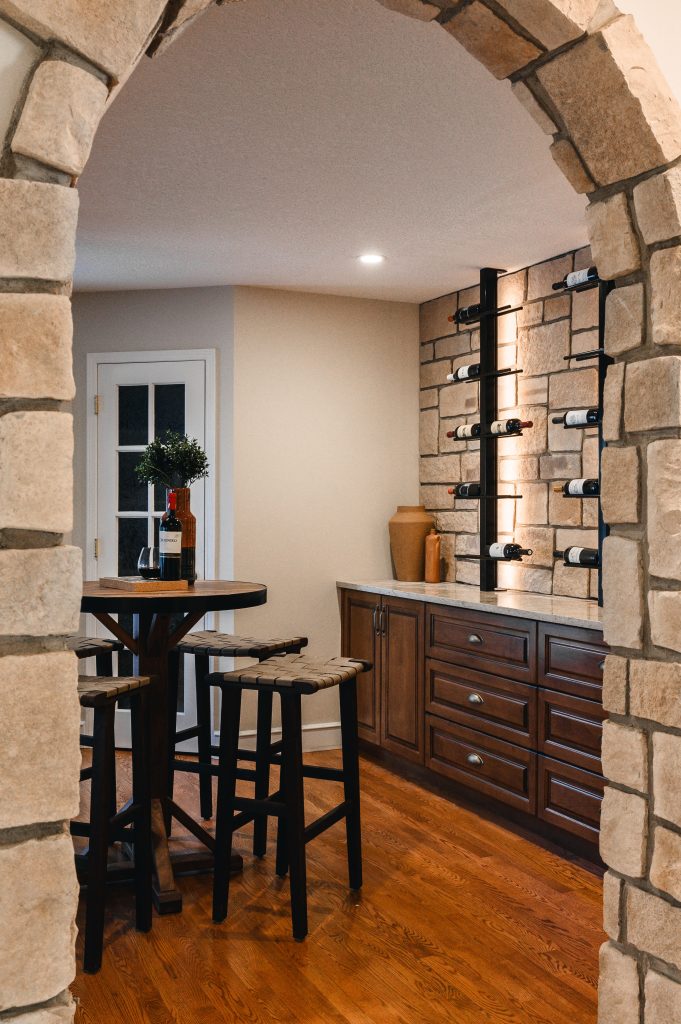
Unshelf’s Coach Hill Wine Tasting project is a perfect example of how to take existing oak elements and give them a modern twist with the help of walnut. This space was absolutely dominated by original oak features—red oak floors, orange oak panelling, and yellow oak cabinets—which the client wanted to keep. We had to fully embrace the oak instead of fighting it. The result is a space that honours its oak roots while feeling thoroughly modern and high-class (click the link above to see for yourself!).
This project is proof that you don’t need to gut your space to give it a fresh, contemporary feel. Sometimes, all you need is a fresh perspective, some strategic additions, and a willingness to see the potential in what others might overlook.
Check out these 11 BEST cosmetic design tips for an old home renovation!
Tips for Mixing Oak and Walnut
We’ve covered the basics of mixing oak and walnut, like embracing contrast, but these pro tricks will really make your space sing.
Mind Your Undertones
Oak can have red, yellow, or orange undertones, while walnut typically has cool, almost purplish undertones. The key is to pair woods with complementary undertones. For instance, a yellowish oak pairs nicely with a rich, dark walnut. Not considering wood tones will create a look that clashes.
Use a Buffer
If you’re nervous about mixing wood tones directly, use a buffer. A rug under your walnut coffee table can ease the transition to your oak floors. Try a tablecloth on your oak dining table before you commit to those walnut chairs. Throw a chunky knit throw on your walnut bench or some textured art above your oak sideboard can break up the wood tones and add visual interest.
Buffers with soft, textured, contrasting finishes like rugs, pillows, books, and upholstery are beneficial because they keep the space from feeling too heavy and dark. Wood is nice. Wood is cozy. We love wood. But we don’t want to be swimming in it.
Don’t Forget the Supporting Cast
Oak and walnut are the stars for sure, but don’t neglect the rest of your decor. Metals, fabrics, and other materials can help tie your oak and walnut pieces together. A brass lamp on a walnut side table next to your oak bookshelf? Chef’s kiss.

Consider Light
Lighting can dramatically affect how wood tones appear. Natural light is your best friend because it brings out the true colours of both oak and walnut. If you’re working with a darker space, warm artificial lighting can help blend the tones and create a cozy atmosphere.
Stay Balanced
If you go heavy on oak in one area, balance it with walnut elsewhere. This creates a sense of intentionality and flow throughout your space. Everything in moderation.
Don’t Be Afraid to Refinish
If you love a piece but the tone isn’t quite right, remember that wood can be refinished. That orange-toned oak buffet? A little sanding and some stain can transform it into a piece that plays perfectly with your walnut furniture.
In the end, mixing oak and walnut is all about finding harmony in contrast. You have to embrace the differences between these two woods while balancing them thoughtfully throughout your space. Don’t be afraid to experiment, refinish, or use a few well-placed buffers to bring everything together.
It’s your home, and it’s your personal touch is what makes it unique. With a bit of confidence and creativity, you can transform your space into an inviting, oaky-walnuty masterpiece that hugs!
Need help bringing your oaks and walnuts together in your project? Contact Unshelf today!